

Most small business owners reach a point where financial questions become harder to answer without the financial infrastructure in place. Revenue is real. Complexity is growing. The decisions carry more consequences than they did two years ago: a new hire, a pricing change, a credit facility, a new market. And the bookkeeper, however accurate, cannot[…]
Read More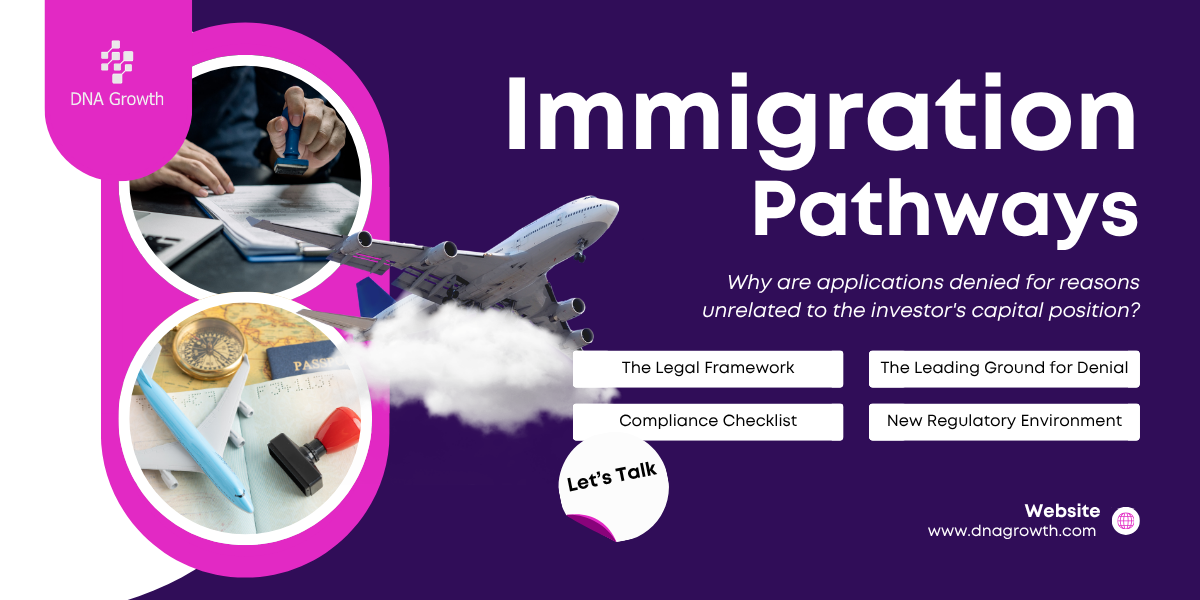
The E-2 treaty investor visa has no annual cap, no fixed investment minimum, and no mandatory job creation threshold. That combination is why it remains one of the most-used business immigration pathways into the United States, and why so many applications are denied for reasons unrelated to the investor’s capital position. The business plan is[…]
Read More
As businesses grow, financial complexity increases faster than many leadership teams anticipate. Multi-entity operations, international expansion, M&A activity, investor reporting, cash flow optimization, regulatory compliance, and technology integration all require financial leadership that extends far beyond traditional accounting. For many large organizations, hiring another full-time executive isn’t always the most efficient solution. Instead, companies are[…]
Read More
Every successful business has a vision—but vision alone does not drive growth. Organizations achieve sustainable success by translating long-term goals into measurable daily actions. This is where understanding the difference between strategic plan and operational plan becomes essential. While these two planning frameworks are closely connected, they serve distinct purposes. A strategic plan defines where[…]
Read More
Building a startup requires more than a great product, a talented team, or strong market demand. As a company grows, financial complexity increases rapidly. Founders who once managed finances with spreadsheets and basic bookkeeping often face investor reporting requirements, fundraising challenges, cash flow constraints, and strategic planning decisions. This is where a fractional CFO for[…]
Read More
Every growing business generates financial data. The challenge is not collecting it—it’s turning that information into actionable insights. This is where CFO reports become essential. Unlike standard accounting reports that focus on historical transactions, CFO reports are designed to help leadership teams understand financial performance, identify risks, forecast future outcomes, and make informed strategic decisions.[…]
Read More
Growth rarely happens in a straight line. For many companies, the fastest path to expansion, market share, talent acquisition, or competitive advantage comes through mergers and acquisitions (M&A). Yet while headlines often focus on deal values and closing announcements, experienced executives know that the real challenge lies in executing the transaction correctly. This is where[…]
Read More
Venture capital and growth equity investing have evolved significantly over the last decade. While capital remains essential, investors today are looking beyond funding rounds and valuation multiples. They want operational discipline, reliable reporting, measurable performance metrics, and clear visibility into portfolio health. As competition for capital intensifies and limited partners (LPs) demand greater transparency, the[…]
Read More
Most real estate investors have a deal they love. What they don’t have is the infrastructure to support the tenth deal or the thirtieth. That’s the problem with the way most people approach a real estate investment company business plan. They write it to raise capital or satisfy a lender. They include the executive summary,[…]
Read More
The role of the CFO has changed dramatically over the past few years, and for the better. What was once considered a position reserved for large enterprises has now become a strategic necessity for startups, scaling businesses, CPA firms, and mid-market companies trying to navigate tighter margins, rising operational complexity, investor expectations, and faster decision-making[…]
Read More- 1
- 2
- 3
- …
- 12
- NEWER POSTS