
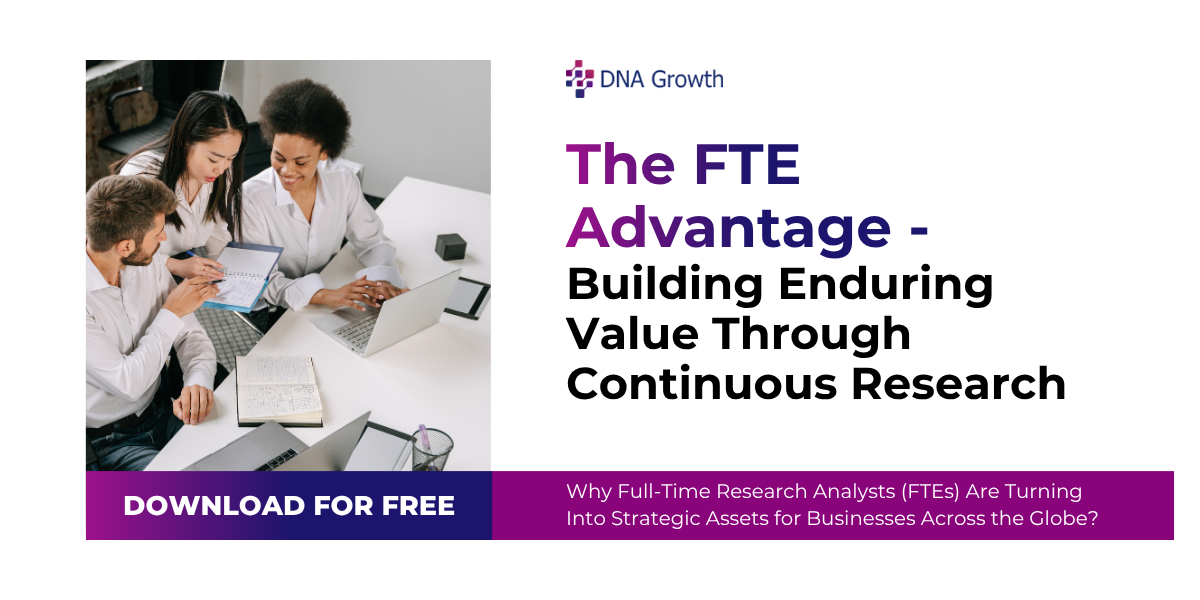
In dynamic and complex markets, traditional project-based research models fail to deliver sustained strategic value. Research remains fragmented, reactive, and disconnected from long-term priorities. This white paper presents the Full-Time Equivalent (FTE) research model as a continuous, embedded capability. By integrating dedicated researchers into business workflows, the FTE model builds institutional knowledge, accelerates insights, strengthens[...]
Read More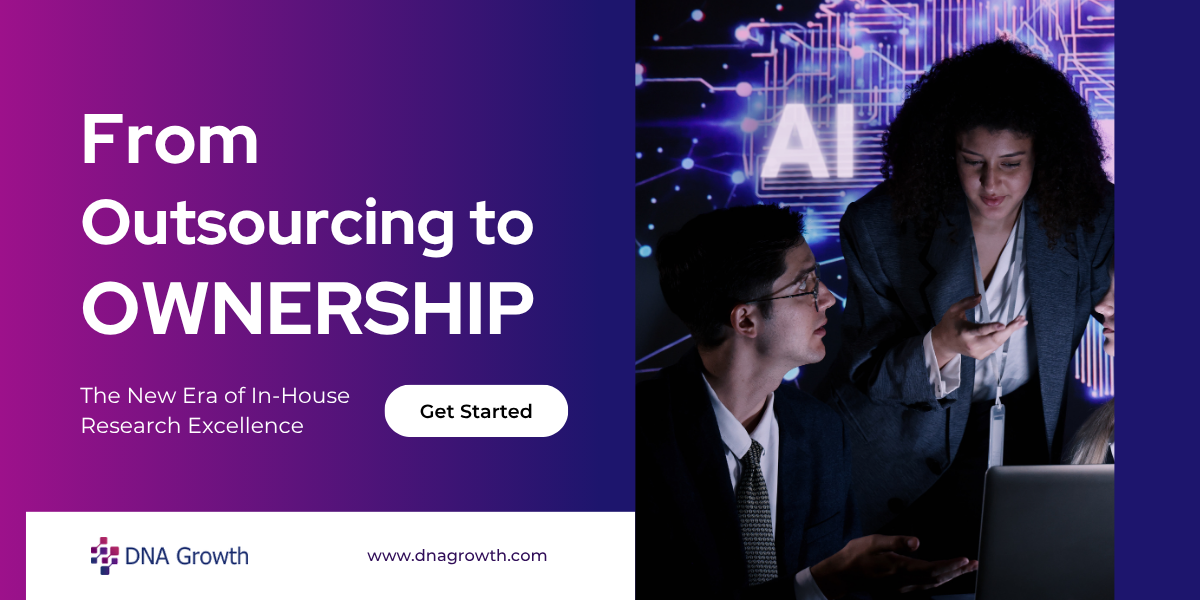
By embedding dedicated research professionals within internal teams, organizations gain consistent capability, real-time responsiveness, and deeper alignment with long-term goals. The FTE approach transforms research from a transactional service into a core strategic asset, enabling more accurate workforce planning, predictable resource allocation, and sustainable institutional knowledge. This white paper outlines how transitioning from outsourcing to[...]
Read More
This white paper examines how the Full-Time Equivalent (FTE) model strengthens enterprise research intelligence and improves strategic decision-making. As organizations face expanding data ecosystems and faster decision cycles, traditional outsourced or project-based research often lacks continuity, context, and long-term alignment. FTE roles provide consistent staffing structures, clearer productivity measurement, and stronger support for informed decisions.[...]
Read More
This white paper explores how autonomous AI systems are reshaping enterprise decision intelligence by moving from manual analytics to agent-driven, proactive decision-making. It examines how intelligent agents enhance speed, precision, and adaptability through real-time data, reasoning engines, and workflow integration. The whitepaper also outlines governance and oversight frameworks that ensure transparency, auditability, and ethical use.[...]
Read More
This white paper defines how agentic AI can be governed responsibly as systems evolve from automated tools to autonomous decision-makers. It explores the shift from reactive oversight to proactive design grounded in ethics, transparency, and accountability. By aligning global regulation, technical standards, and lifecycle governance, organizations can scale AI safely while preserving trust and human[...]
Read More
Autonomous agents are redefining the next phase of digital transformation by movingenterprises beyond static automation and into systems capable of independent reasoning, adaptation, and continuous optimization. As organizations face increasing complexity, rapid scale demands, and real-time decision requirements, embedding intelligent agents into the core of business architecture is becoming essential rather than optional. This whitepaper[...]
Read More
Multi-agent Collaboration Systems (MAS), composed of autonomous and specialized AI agents coordinated through orchestration and communication protocols, provide a robust alternative. By enabling coordinated reasoning, tool use, and role-based task division, MAS delivers scalable, resilient intelligence to meet complex enterprise needs. This whitepaper examines how MAS enables enterprise co-intelligence through distributed reasoning, domain specialization, and[...]
Read More
This white paper examines the transition from traditional automation models to a fully agentic enterprise capable of intelligent, autonomous operations. It outlines the architectural tenets, technological enablers, and governance frameworks needed to build scalable ecosystems of self-learning, self-correcting, and self-optimizing AI agents. Businesses can attain previously unheard-of levels of productivity, flexibility, and resilience by combining[...]
Read More
Prompt engineering represents the evolving art and science of communicating effectively with artificial intelligence systems. This white paper explores how prompt design principles enable smarter AI models capable of adaptive learning and dynamic problem solving. It examines the underlying mechanisms, methodologies, and best practices that shape precision-driven responses. Furthermore, it highlights the significance of prompt[...]
Read More
This white paper examines how intelligent research agents are transforming traditional research into a faster, more adaptive, and decision-centric capability. It explores how AI-powered agents automate discovery, reasoning, and synthesis across vast data environments to accelerate insight generation and improve decision intelligence. The white paper highlights the value of agent-driven research to the enterprise. It[...]
Read More- 1
- 2
- 3
- …
- 10
- NEWER POSTS